
Kunzite, which has a lavender color due to the presence of manganese, was discovered in California in 1902 by Dr. KUNZ, and has been a gemstone ever since. The composition of lithium-aluminosilicate is lithium-aluminosilicate, which belongs to the monoclinic crystal system. In addition to lithium-aluminosilicate colored by manganese, lithium-aluminosilicate is also available in other colors, but the color is very unstable.
Initially discovered her Dr. KUNZ was then Tiffany's chief gemmologist and then famous mineralogist, he is this description of the purple lithium Hui: "this new discovery of lithium pyroxene internal clean, with a rosy lilac hue, and horizontal observation is very light color, vertical observation is rich amethyst-like hue. "
[Origin].
The main sources of purple lithium faience include Brazil, Pakistan, and Afghanistan.
[Selection of Purple Lithium Glow].
①Color
The more intense the color and the purer the interior of the lithium faience, the less likely to fade, more collectible;
②Cutting
Bright cut, highlighting the fire color, to ensure the concentration of color is preferred;
③Carat weight
Purple LiPhosphorite is a kind of gemstone with larger production and larger carat weight, if you want to collect it, you can choose more than 20 carats.
[Precautions for Wearing Purple Lithium Pyrite
① Avoid prolonged exposure to strong ultraviolet light
The color of Lithium Purple Pyrite is unstable, try to avoid prolonged exposure to strong ultraviolet rays or strong heat.
②Avoid the impact of lithium amethyst.
Lithophane is susceptible to cracking along the cleavage when it is struck by an external force, so try to wear it alone or store it separately.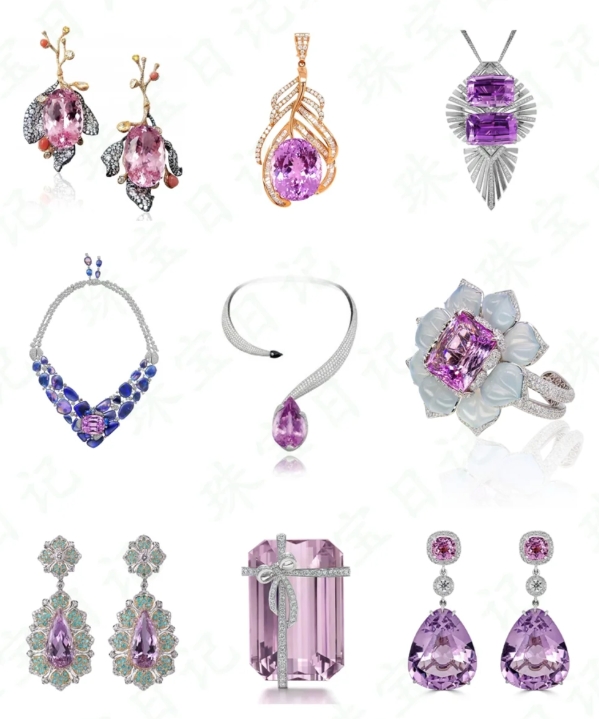
 The Ultimate Gift Guide for Watch Lovers and Jewelry Collectors
 5 Reasons to Meet the FANXI Team in Hong Kong This September
 Engineered for Presentation, Built for Protection
