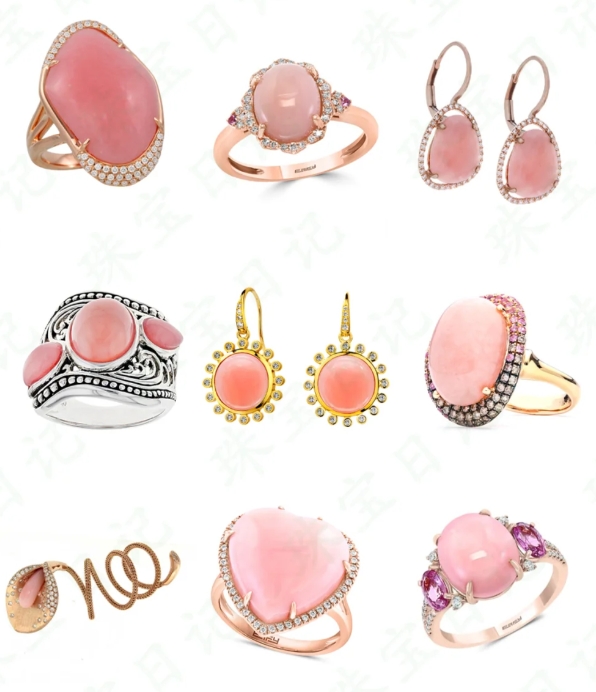
Pink opal is a kind of precious opal without color change effect. Pink opal texture delicate warm, delicate and soft color, with ceramic luster, in the West is known as "angel's skin", and was crowned "the most representative of the woman's gemstone" title. It is also a symbol of love and peace.
Pink Opal
Classification: Silicate Mineral
Chemical formula: SiO₂-nH₂O
Luster: Resin luster
Fracture: shell-like
Refractive index: 1.45
Specific gravity: 1.980-2.550
Mohs hardness: 5-6.5
Transparency: Translucent - Opaque
Origin: Pink Opal is mainly produced in Peru and Mexico.
[Selection
High-quality pink opal should be uniform in color, opaque, warm and delicate texture, solid structure, no cracks or obvious flaws on the surface, with ceramic-like luster.
Because of the high possibility of black fine lines, white spots, surface cracks and other situations that directly affect the overall feeling, so the large particles of pink opal is more precious, and the commercial value is also high.
Collector's Value
Due to the scarcity of production, uncommon gemstones, recognition is low, so compared to the color effect of the opal, the price of pink opal is still in a low position. However, with the increase in market awareness, a significant surge in prices is foreseeable in the future.
Compared to opals with color-changing effects (opals), pink opals have a firmer texture, a stable molecular structure, and the gemstone itself is highly malleable, which makes it a good choice for the international jewelry industry. For those who like opals, now is undoubtedly the perfect time to collect.
Maintenance
Pink opals should be worn without impact or friction to prevent damage to the stone. In addition to this, you should also be careful in the continuous high temperature exposure may produce surface cracks, any strong acid and alkali chemicals should also be avoided. Keep it moist and maintain it with a neutral base oil.

 The Ultimate Gift Guide for Watch Lovers and Jewelry Collectors
 5 Reasons to Meet the FANXI Team in Hong Kong This September
 Engineered for Presentation, Built for Protection
