Apatite was named by Werner, the "father of German geology", meaning "to deceive, to mislead", because apatite can easily be mistaken for other minerals such as topaz and aquamarine. Apatite is a phosphorus-bearing mineral that occurs as crystalline apatite in igneous and metamorphic rocks. It is a general term for a group of calcium-containing phosphate minerals. The most common apatite is fluorapatite.
[apatite].
Class: Calcium phosphate
Chemical formula: Ca5(PO4)3(F,Cl,OH)
Crystal system: hexagonal crystal system
Hardness: 5
Fracture: uneven, visible shell-like fracture
Luster: glassy
Optical properties: non-homogeneous, monoclinic, negative optical properties
Transparency: transparent - translucent
Refractive index: 1.634-1.638
Birefringence: 0.002-0.008
Specific gravity: 3.130-3.230
[Origin].
Apatite originates from Brazil, Mexico, Burma, Canada, Czech Republic, Germany, India, Mozambique, South Africa, Spain, Sri Lanka and the U.S.A. The most beautiful neon blue apatite is mainly from Madagascar.
[color].
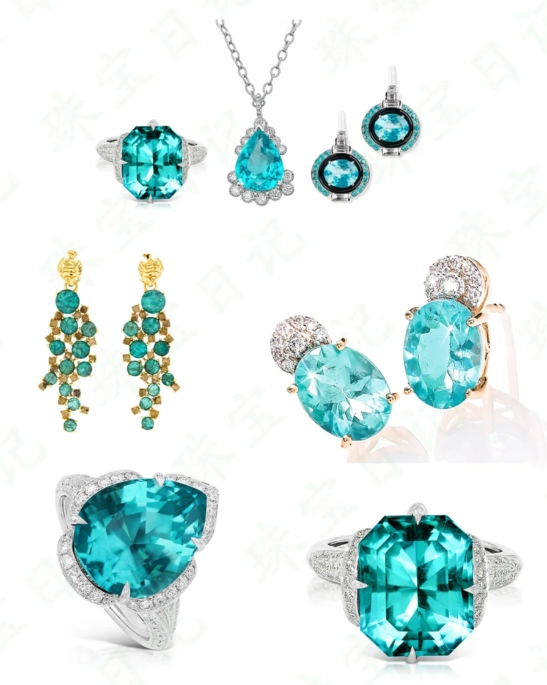
The colors of apatite are yellow, green, blue, purple, pink, brown, colorless, etc. The common colors are green and yellow, but the most well-known and popular color of apatite is the bright neon blue-green color, which is similar to the expensive Paraiba blue tourmaline, and it is much more affordable than the rest of the colors of apatite although it will still be more expensive than the rest of the colors of apatite.
[Value]
Apatite on the market now is mostly blue and green, the market popularity is not high, so the price has been in the gemstone in the low-end, the price in a few hundred dollars / carat, which is closer to the color of Paraiba tourmaline apatite price is higher.
[Preservation].
Apatite is soft, so watch out for scratches. Avoid using ultrasonic cleaners.

 Luxury Contrast Jewelry Display Stands | Elevate Your Jewellery with Premium Display Solutions
 Where Luxurious Brilliance Shines on Every Stage – The FANXI Deep Brown Microfiber Jewelry Display Set
 Elevating Jewellery’s Radiance: FANXI Premium Jewellery Display Props
 Elevate Your Jewels with Black Velvet: FANXI’s Premium Jewelry Display Set – Where Every Piece Shines Bright
